Tracing Venue-Specific Surface Interactions with Performance Metrics Across International Tennis Circuits
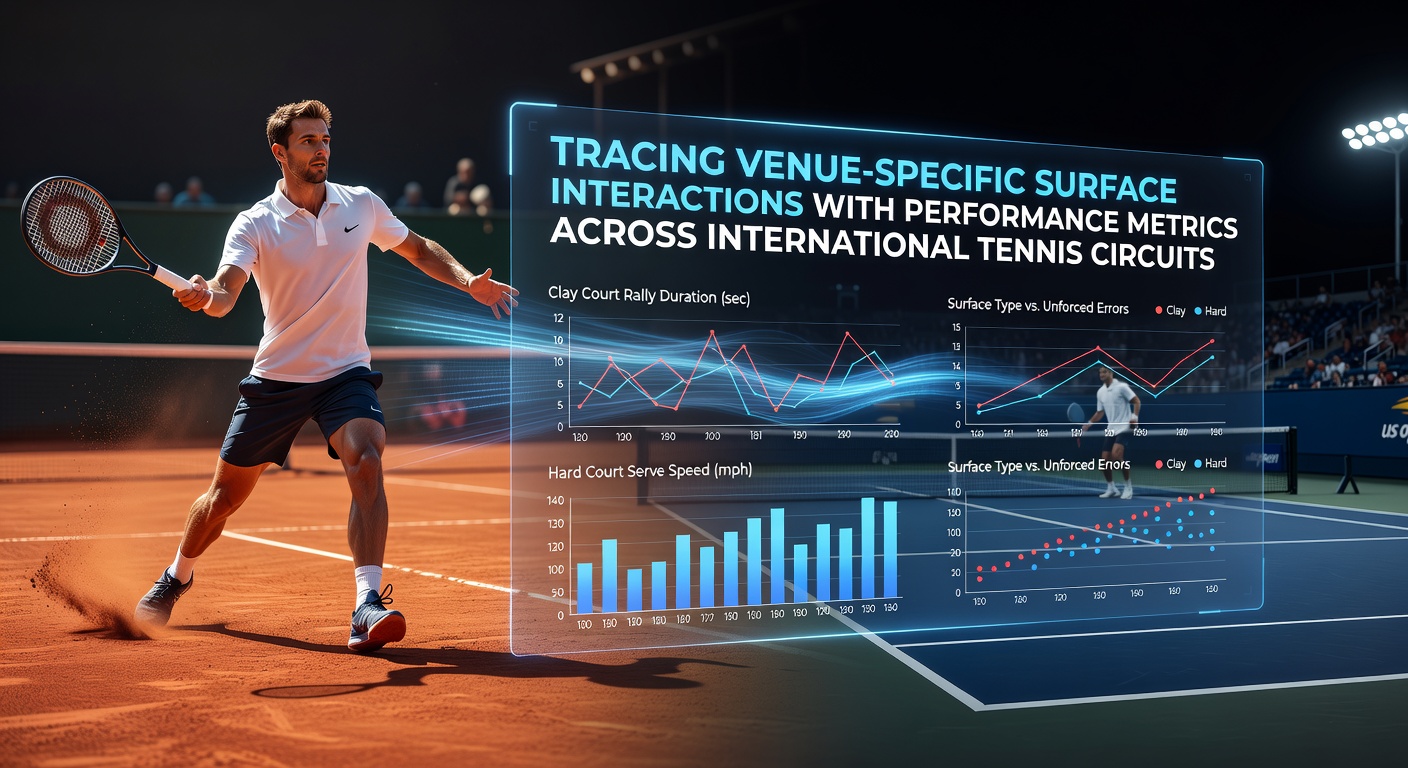
International tennis circuits feature distinct court surfaces that alter ball behavior, player movement, and overall match dynamics in measurable ways. Researchers track these interactions through performance metrics such as rally duration, serve effectiveness, and error rates at specific venues including Roland Garros, Wimbledon, and the Australian Open. Data collected across ATP and WTA events reveal consistent patterns tied to surface composition and maintenance practices at each location.
Surface Characteristics and Ball Dynamics
Clay courts slow ball speed while increasing friction, which extends rally lengths and reduces the impact of powerful serves. Hard courts deliver consistent bounce with moderate speed, supporting a balanced mix of baseline rallies and net approaches. Grass surfaces produce low, skidding bounces that favor players who rely on quick points and effective serve-volley tactics. Venue maintenance teams adjust clay moisture levels and grass height daily, creating micro-variations that influence outcomes at individual tournaments.
Performance tracking systems installed at major sites capture precise measurements of spin rates and court speed indices. Observers note that these readings correlate directly with player success rates when aggregated over multiple seasons. International circuits rotate between surfaces throughout the calendar, forcing athletes to adapt their training regimens accordingly.
Metric Collection Across Global Tours
ATP and WTA statisticians compile data from every match, focusing on metrics like first-serve win percentage and unforced error frequency at each venue. Studies conducted by the International Tennis Federation document how these figures shift between tournaments held on the same surface type but at different elevations or climates. For instance, high-altitude hard courts in Latin America produce faster conditions than sea-level equivalents in North America.
June 2026 marks the transition from European clay events to the grass court swing, with players adjusting footwork patterns to accommodate lower bounces. Performance databases show increased net points attempted during this period compared to earlier clay swings. Analysts cross-reference these trends against historical records to identify recurring surface-specific advantages.
Venue-Specific Patterns in Player Performance
Individual tournaments demonstrate unique signatures in their performance data. Roland Garros consistently records the longest average rally lengths among Grand Slams, while Wimbledon produces shorter exchanges dominated by serve dominance. The US Open hard courts yield intermediate values that reflect their medium-paced conditions. Secondary events such as those in Madrid and Indian Wells further illustrate how surface preparation at each site modifies expected outcomes.

Players who excel on one surface often display measurable declines when moving to another, according to longitudinal studies. Footwork efficiency metrics captured via motion sensors highlight these adaptations, with clay specialists showing higher slide frequencies and grass specialists demonstrating quicker directional changes. Tournament organizers publish aggregated reports that allow comparison across circuits.
Regional Variations and Circuit Trends
European clay circuits emphasize endurance-based metrics, whereas Australian and American hard court swings prioritize speed and power indicators. Asian tournaments on indoor hard surfaces introduce additional variables related to lighting and air circulation. Data from the ATP Tour statistics portal tracks these regional differences across thousands of matches each year.
Researchers at institutions such as the Australian Institute of Sport have examined how surface interactions affect injury rates and recovery times. Their findings indicate elevated lower-body stress on grass compared with clay, prompting adjustments in player scheduling across international tours. These studies integrate biomechanical data with match statistics to produce venue-specific profiles used by coaching staffs worldwide.
Integration of Technology in Surface Analysis
Advanced tracking tools now combine Hawk-Eye data with court surface sensors to generate real-time performance insights. This approach reveals how ball spin interacts with microscopic court textures at specific venues. Circuits in South America and Asia have adopted similar systems, enabling consistent metric collection across hemispheres.
Coaches review these datasets to tailor practice sessions before traveling to particular tournaments. Patterns emerge when comparing early-round versus late-round statistics at the same location, often linked to progressive court wear throughout an event. International governing bodies continue expanding data-sharing protocols to support such analysis.
Conclusion
Venue-specific surface interactions produce distinct performance signatures that researchers quantify through detailed metrics gathered across global tennis circuits. Continued refinement of tracking technologies and cross-regional data collaboration enhances understanding of these relationships. Observers expect further integration of environmental sensors as circuits expand their analytical capabilities in coming seasons.