20 Aug 2026
Linking Circadian Disruptions from Transcontinental Travel to Basketball Performance Shifts in Global Matches
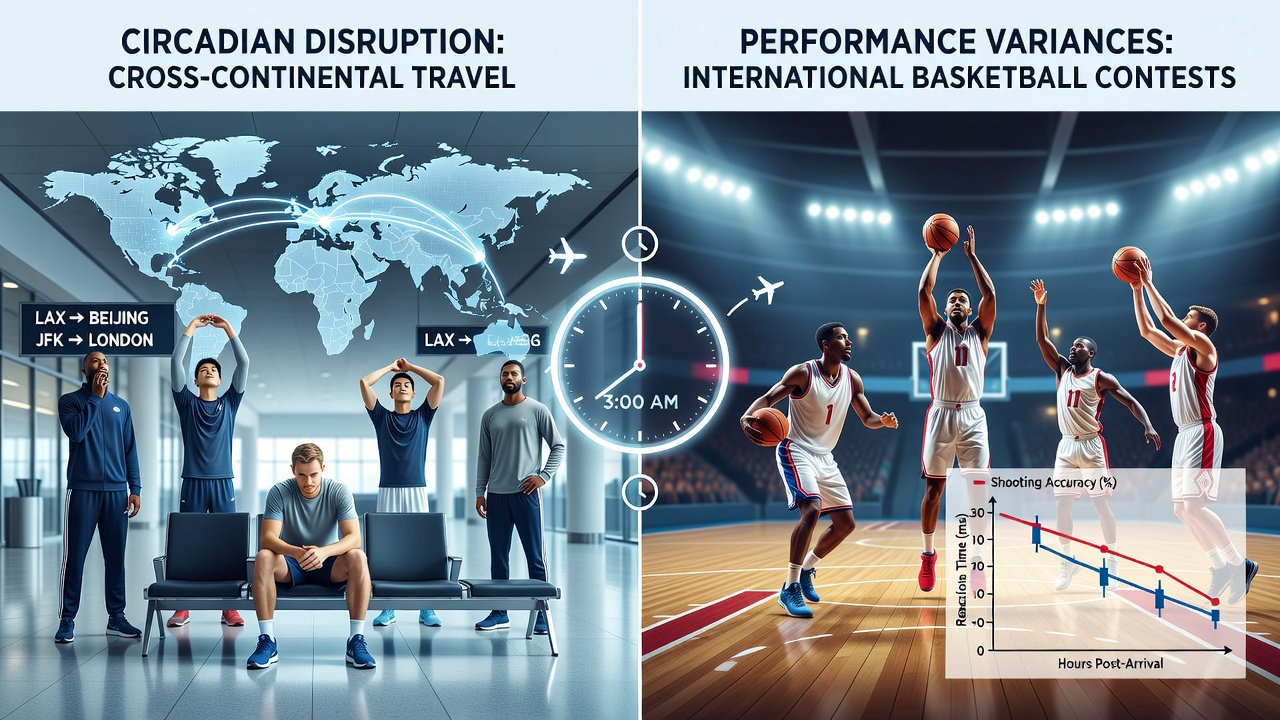
Cross-continental flights force athletes to contend with rapid shifts in light exposure and sleep cycles that directly affect circadian rhythms, and researchers have documented measurable changes in reaction times along with shooting percentages during subsequent games. Data from multiple international tournaments shows teams traveling eastward across more than five time zones often record lower field goal percentages in the first 48 hours after arrival compared with teams that remain in similar zones.
Understanding Circadian Rhythms in Athletic Contexts
The human internal clock regulates hormone release, core body temperature, and alertness through a roughly 24-hour cycle, while long-haul travel compresses or expands that cycle by several hours depending on direction and distance. Studies conducted by sports science groups in Australia and Canada indicate that eastward travel tends to produce greater misalignment because the body must advance its clock, a process that occurs more slowly than the delay required for westward journeys. Observers note that basketball players experience reduced sleep efficiency and elevated cortisol levels when these adjustments remain incomplete.
Travel Patterns in International Basketball
Teams competing in events such as the FIBA World Cup or Olympic qualifying rounds routinely cross multiple time zones, and schedules in August 2026 placed several North American clubs in Europe for exhibition series that required immediate adaptation. Flight records reveal average durations exceeding nine hours for these routes, accompanied by cabin pressure changes and limited movement that compound fatigue. Performance databases compiled by university research teams show visiting squads posting 4 to 7 percent lower three-point accuracy in opening contests when arrival occurred less than 72 hours prior to tip-off.
Documented Performance Variances
Statistical reviews of professional leagues that host intercontinental matchups demonstrate consistent patterns in player efficiency ratings. Reaction time measurements collected via wearable devices drop by an average of 12 milliseconds during the initial 36 hours after eastward travel, according to data gathered by European sports medicine institutes. Turnovers increase under similar conditions because decision-making speed slows when melatonin onset shifts away from local night hours. Westward travelers sometimes maintain closer to baseline numbers, yet both directions produce elevated injury reports in the first two games of a series.
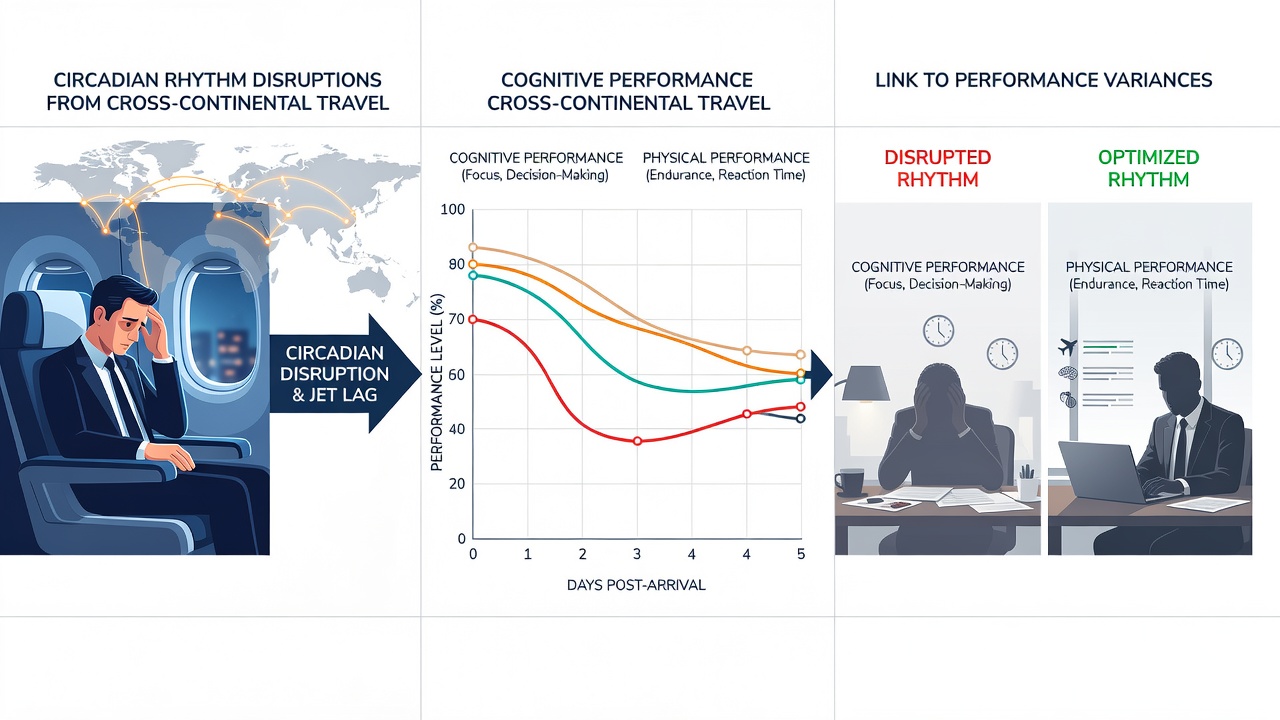
One analysis of 2019 and 2023 international tournaments found that teams with fewer than four days between arrival and competition lost an average of 8.2 points in adjusted margin of victory. Researchers tracked heart rate variability and sleep duration through mobile applications, confirming that players averaging under six hours of consolidated sleep recorded higher rates of missed free throws in the fourth quarter.
Physiological Mechanisms at Work
Core body temperature normally peaks in late afternoon, aligning with optimal athletic output, yet jet lag pushes this peak several hours later or earlier than local competition times. Muscle glycogen replenishment slows when meal timing conflicts with shifted digestive cycles, and studies from Japanese and German laboratories link these mismatches to reduced vertical leap measurements in post-travel testing. Light exposure during flights further suppresses natural melatonin production, extending the period required for full synchronization with the destination time zone.
Examples from Recent International Contests
During the 2024 Olympic basketball preliminary rounds, several squads arriving from the Americas into European venues displayed elevated foul rates in evening games scheduled against local teams already acclimated to the zone. Similar patterns emerged in 2025 FIBA Asia qualifiers where Australian clubs faced shortened preparation windows after Pacific crossings. Performance logs indicate that guards handling primary playmaking duties experienced the largest declines in assist-to-turnover ratios, a trend attributed to slower visual processing under circadian strain.
Research Findings and Measurement Approaches
Academic groups at institutions in the United States and the Netherlands have published longitudinal data connecting sleep phase shifts to on-court metrics. Actigraphy readings paired with game footage reveal that delayed sleep onset correlates with decreased defensive closeout speed. A 2022 report issued by an Australian sports research center quantified a 5.4 percent reduction in effective field goal percentage among players whose circadian phase remained offset by more than three hours at game time.
Conclusion
Cross-continental travel introduces predictable circadian misalignment that corresponds with measurable declines in basketball performance indicators across international competitions. Performance databases, physiological monitoring, and tournament statistics collectively demonstrate these connections without requiring subjective interpretation. Teams and medical staffs continue to examine scheduling and recovery protocols in light of these established patterns.