2 Aug 2026
Decoding the Relationship Between Pitch Conditions and Goal Scoring Trends in Global Soccer Competitions

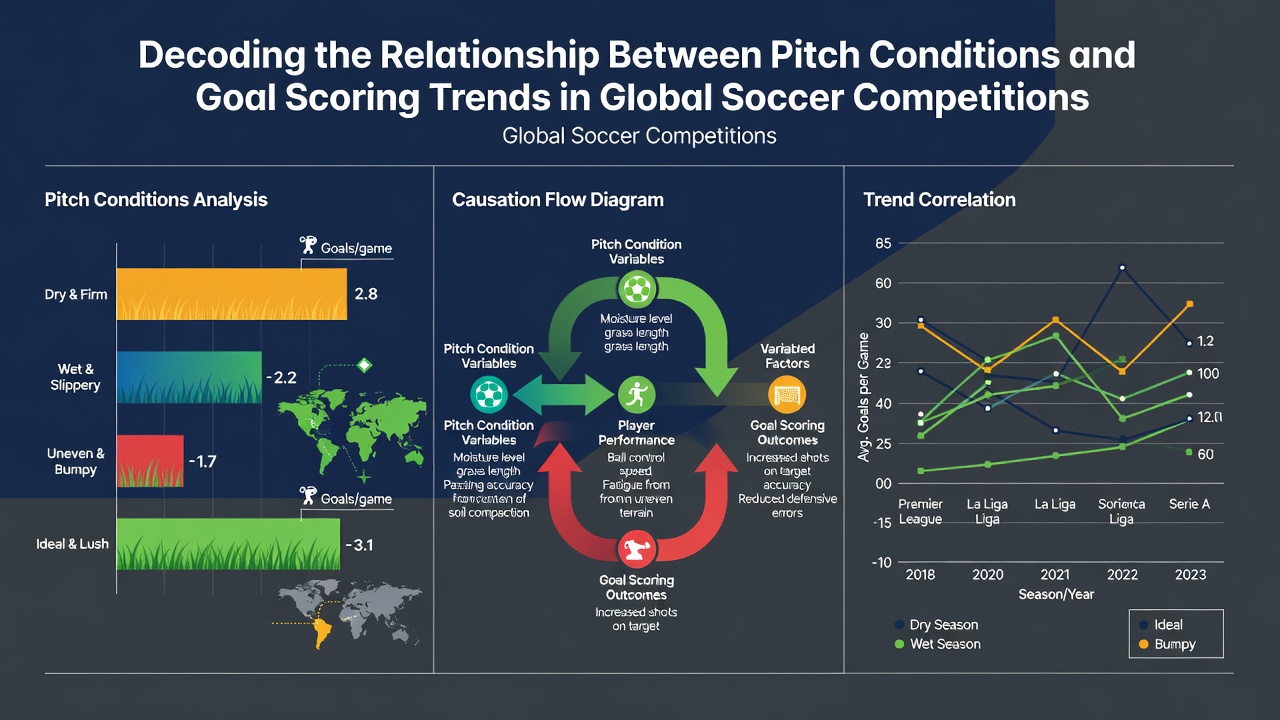
Pitch conditions shape goal scoring trends in global soccer through measurable differences in surface type, grass length, moisture levels, and overall maintenance, and data from multiple confederations shows consistent patterns across domestic leagues and international tournaments. Natural grass pitches with longer blades tend to slow the ball and increase physical demands on players, which often reduces the total number of goals compared to shorter, firmer surfaces that allow quicker passing sequences and more shots on target. Researchers tracking matches in the UEFA Champions League and Copa Libertadores have noted that these surface variations create distinct statistical profiles for attacking and defensive play styles.
Pitch Surface Types and Their Measurable Effects
Natural grass remains the dominant surface in most major competitions, yet hybrid systems combining natural and artificial fibers have gained adoption in European and Asian leagues since the mid-2010s, and studies indicate these hybrids produce intermediate goal rates between pure grass and fully artificial turf. Artificial pitches, still used in parts of Scandinavia and North America, correlate with higher shot volumes because the ball travels faster and bounces more predictably, leading to increased scoring opportunities in leagues such as the Norwegian Eliteserien. Observers note that maintenance schedules also matter, since freshly cut pitches in the opening weeks of the season frequently yield different goal distributions than the same venues later when wear accumulates.
Weather Influences on Pitch Behavior
Rain and temperature shifts alter pitch moisture and firmness within hours, and meteorological records paired with match statistics reveal that wet conditions in temperate climates often produce fewer goals because the ball becomes heavier adn passes lose speed. Hot, dry weather in southern Europe and South America tends to create harder surfaces that favor long-range attempts, with data from CONMEBOL competitions showing elevated goal tallies during afternoon fixtures in summer months. Those who have analyzed thousands of match reports find that extreme heat also increases fatigue, which indirectly affects late-game scoring as teams struggle to maintain pressing intensity.
Regional Patterns Across Competitions
European leagues exhibit lower average goals on rain-affected pitches during winter rounds, whereas Asian and Oceanian competitions record higher scoring when pitches remain firm under milder conditions, and a CONMEBOL technical report highlights these contrasts through comparative data from multiple member associations. Altitude compounds surface effects in venues such as those in the Andean region, where thinner air allows the ball to travel farther yet the firmer highland pitches can reduce dribbling effectiveness, resulting in goal distributions that differ from sea-level matches. Australian researchers examining A-League fixtures have documented similar altitude-surface interactions during cross-country travel.
Seasonal and Tournament-Specific Trends
League schedules that begin in August often coincide with drier pitches in northern Europe, and historical datasets show elevated goal averages in opening matchweeks before autumn rains arrive and slow surfaces. World Cup and continental tournament pitches undergo standardized preparation that minimizes variation, yet even these controlled conditions produce measurable differences between venues, with research indicating that stadiums using hybrid turf host slightly higher scoring rates than those relying on traditional grass alone. Teams that adapt training regimens to local pitch profiles demonstrate improved conversion rates, according to performance analysts reviewing multiple seasons of data.
Conclusion
Comprehensive analysis of pitch conditions across global soccer competitions demonstrates clear statistical relationships with goal scoring trends, and continued collection of surface metrics alongside match data will refine these understandings for future seasons. Governing bodies and clubs already incorporate such information into scheduling and preparation protocols.